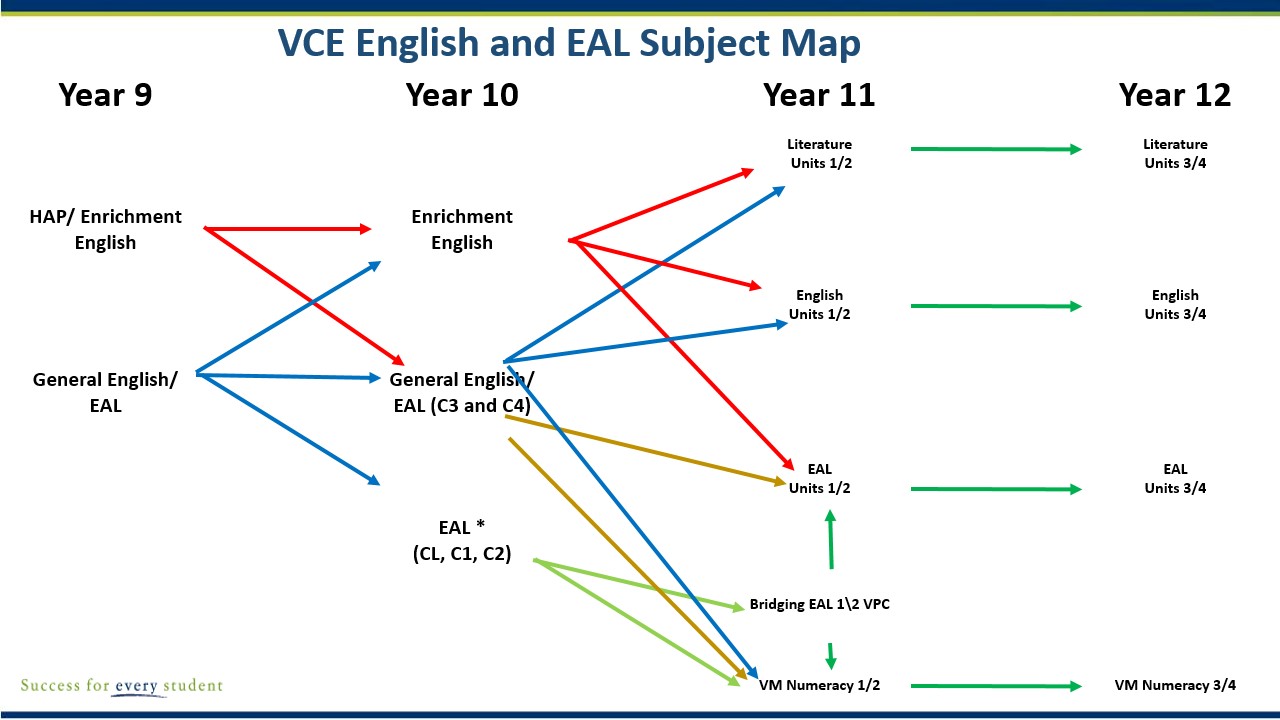
Language () Bridging () is a focused and intensive English language subject designed for students who are still developing their English skills. It supports students in preparing for further study, work, and everyday communication. This subject is part of a three-year program and is especially helpful for students who are currently below the C3 level on the continuum. It aims to build the language skills needed to succeed in a general pathway.
Through this subject, students develop their abilities in speaking, listening, reading, viewing, writing, and critical thinking. The course helps students improve how they use English in different settings—academic, social, and professional. There is a strong focus on both spoken and written Standard Australian English. Students explore grammar, sentence structure, and meaning in detail through a variety of texts and real-life situations. Oral and listening skills are also a key focus of the course.
In this area of study, students explore how English is used for everyday purposes, with the objective of preparing them to be better prepared for their interactions in the real world. Students identify and discuss variations in vocabulary, structures and conventions of spoken and written language, including culturally appropriate non-verbal language for a range of situations, purposes and audiences. These include social interactions, negotiating relationships, seeking and giving information and engaging in conversations and discussion.
In this area of study, students develop their understanding of how English is used for academic purposes. They read and discuss a variety of texts commonly used in studies other than English. Students identify variations in language and discuss the meaning and different functions of vocabulary, symbols and abbreviations. They learn that language in academic discourse may be subject specific for defining or conveying subject content, giving instructions, or outlining processes, as well as non-subject specific, for example to provide background information.
In this area of study students read and produce texts created for self-expression, including those that communicate ideas, desires, goals, opinions and experiences. They consider how authors use language to express themselves for different audiences and purposes. They discuss the decisions authors make to express their ideas in spoken, print and multimodal texts, and understand that authors use vocabulary, structures, features and conventions for different purposes and audiences.
The elective areas of study enable students to extend their understanding of how English is constructed and used in consideration of student pathways. For example, 2, Area of Study 2: English in the media is recommended for student completing their , whilst Area of Study 3: English for the workplace is more for those moving into the workplace or training in the future. One of the following elective areas of study must be selected for study:
In this area of study, students engage with and understand spoken, print, visual, and multimodal media texts and develop an understanding of how these texts reflect cultural contexts and seek to position audiences. In considering the choices made by authors to position their intended audiences, students identify and discuss cues used in articles or websites. Students are also encouraged to engage in online media texts and identify and discuss other digital cues as well as comments and the use of ‘netiquette’.
In this area of study, students focus on speaking, listening, reading and writing communication for workplace purposes. They examine a range of work-related texts and identify and discuss distinctive language, structures, features and conventions used in these texts, and their purposes, intended audiences and contexts.
The purposes of these texts may include providing instructions and information, seeking information, maintaining records, note-taking, recording messages, completing forms or orders, and making requests. Students investigate how work-related written and spoken communication varies according to purpose, context and the roles of participants.


